



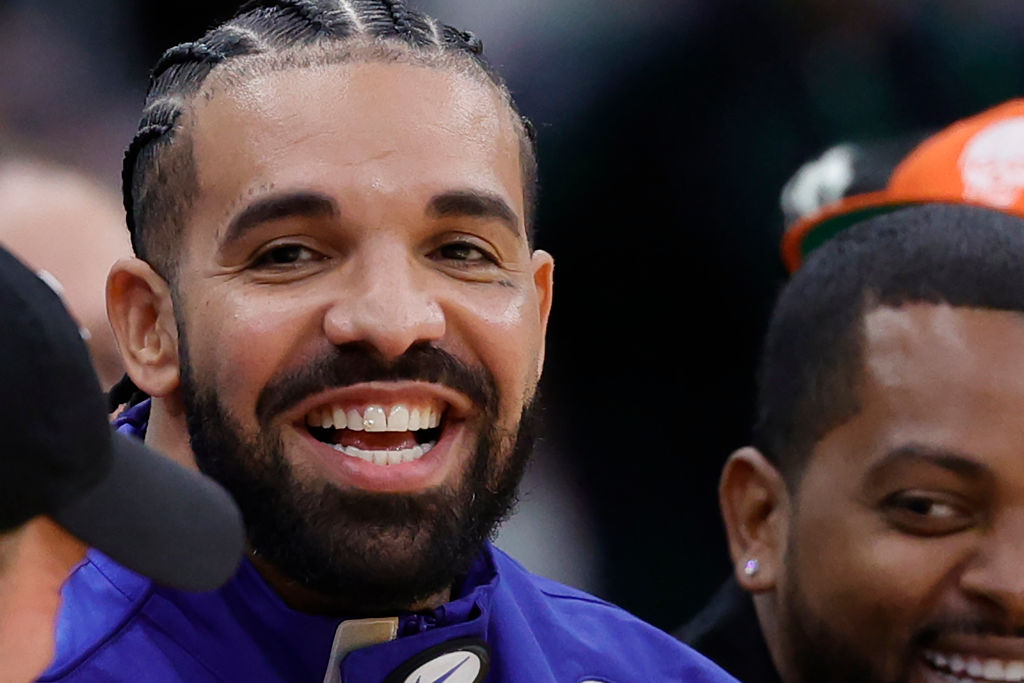
Drake’s Lighthearted Response to Fan Labeling Him “Corny” Goes Viral
 6695
6695  66
66 Drake weighed in on a viral clip in which a fan called him “corny” during a call to the First Class Podcast. The caller said, “I think Drake is a very corny man, and these lyrics further validate his corniness. But I do enjoy this song, and will listen to it sometime.” Sharing the clip on his Instagram Story, Drake offered a brief, playful reaction. In response, he wrote: “I like her style…”
The critique zeroed in on “Gyalchester,” a track from Drake’s 2017 project More Life. The fan highlighted a verse in which Drake declares, “I don’t take naps,” delivered with a defensive edge. “He says it almost as if someone saw him yawn and they were like, ‘Drake, if you’re tired, you should go take a nap,’” she explained. “And he just, like, snaps. He’s like, ‘I don’t take naps.’ But by the sound of it, he probably should take a nap.” As a result, it’s clear that Drake’s verses invite plenty of fan interpretations.
Lyrics, Fans, and the Debate They Spark
She dissected a later verse as well: “And then he says, ‘Me and the money are way too attached to go and do that / Muscle relax / That and the spliff put me right on my back.’” Interpreting the lyrics, she suggested, “So as a listener, we’re assuming he took some pain pills, and he smoked some weed, and he fell asleep, but he just said he don’t take naps. So what are we supposed to believe at this point?” Accordingly, her analysis captures the tension between an artist’s intent and how fans parse the words. This is especially true in the age of social media.
When it comes to controversies and playful debates in hip-hop, Drake consistently remains at the center of discussion. This shows his ongoing influence in music. Drake’s response, though lighthearted, shows his awareness of how listeners engage with his catalog years after release. While some view the critique as playful or humorous, others see it as part of a broader conversation about lyrical precision and performance persona in contemporary hip-hop. Therefore, the episode reflects how music, social commentary, and fan interpretation collide online. Even minor verses can become moments of public debate.